
Dental Bridges & Crowns
Restore Your Smile with Bridges and Crowns
Dental bridges and crowns are two of the most common and effective ways to restore damaged, decayed, or missing teeth. At Hutto Hippo Family Dental, we use the latest technology to create natural-looking, long-lasting restorations for patients from Hutto, Taylor, Round Rock, Pflugerville, and Georgetown.
Dental Crowns
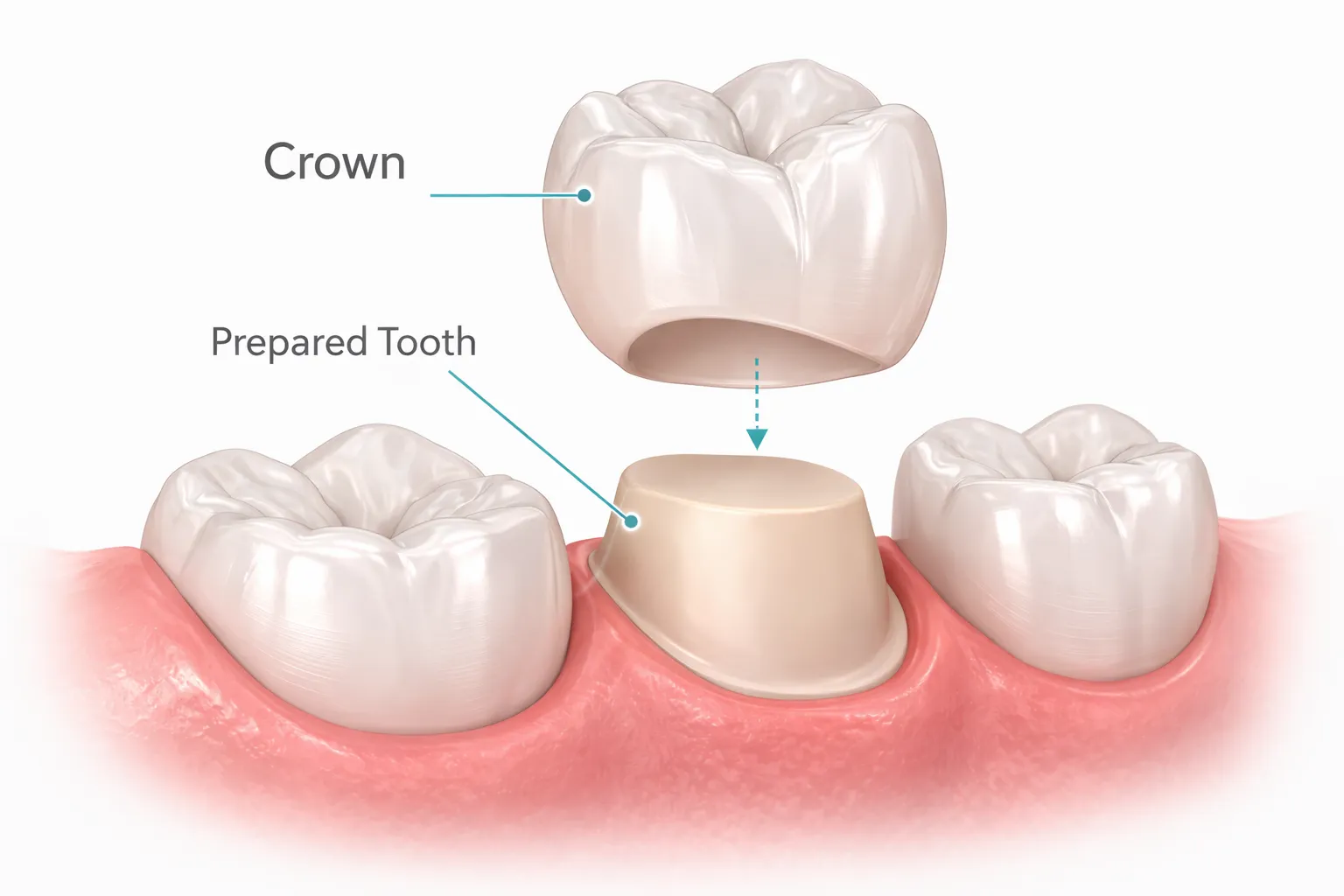
A dental crown (also called a cap) is a tooth-shaped covering placed over a damaged tooth. Crowns are used to:
- Protect a weak or cracked tooth from breaking
- Restore an already broken or severely worn tooth
- Cover and support a tooth with a large filling
- Hold a dental bridge in place
- Cover a dental implant
- Improve the appearance of a discolored or misshapen tooth
Dental Bridges
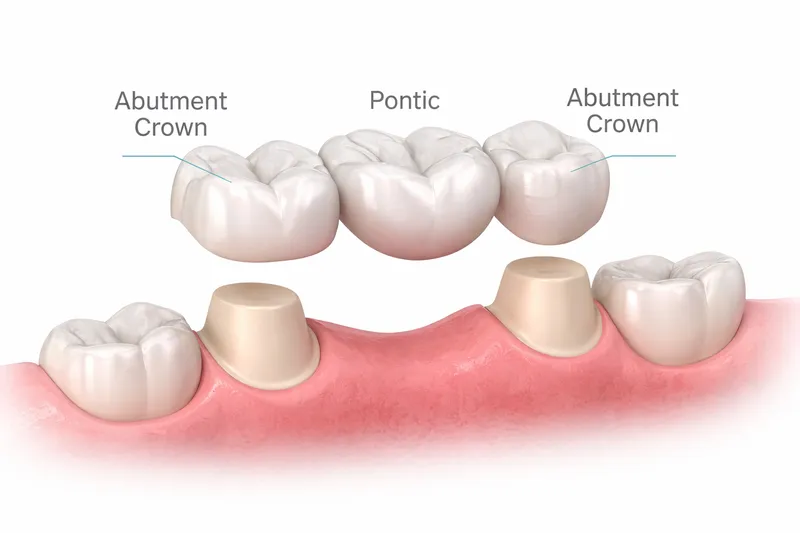
A dental bridge literally “bridges” the gap left by one or more missing teeth. A typical bridge consists of two crowns on the anchor teeth on either side of the gap, with one or more artificial teeth (called pontics) in between.
Benefits of dental bridges include:
- Restore your ability to chew and speak properly
- Maintain the shape of your face
- Distribute the forces of your bite properly
- Prevent remaining teeth from drifting out of position
What Materials Are Used?
Modern crowns and bridges are made from materials chosen to balance durability, appearance, and function:
- Porcelain-fused-to-metal (PFM) — Strong with a natural appearance; the metal substructure provides durability while the porcelain mimics tooth color
- All-ceramic / all-porcelain — Excellent aesthetics with no metal; ideal for front teeth
- Zirconia — An extremely strong ceramic material; excellent for back teeth that endure heavy biting forces; highly biocompatible
We will recommend the best material based on which tooth is being restored, your bite, and your aesthetic goals.
Caring for Bridges — A Note on Flossing
One important maintenance step for dental bridges: you cannot floss between a bridge and the teeth it spans the traditional way. Instead, use:
- Floss threader — Thread floss under the pontic and clean below the gum line
- Water flosser — Effectively removes debris without maneuvering floss
- Interproximal brush — Small brushes designed to clean under bridges
Frequently Asked Questions About Crowns and Bridges
Does getting a crown hurt? No. The tooth is numbed with local anesthesia before any preparation begins. You may feel some pressure, but there should be no pain. After the anesthesia wears off, mild soreness for a day or two is normal.
Can a crown fall off? Crowns are securely cemented, but they can occasionally loosen over many years. If your crown feels loose or comes off, save it and call us right away. Do not try to re-cement it yourself.
What is the difference between a crown and a filling? A filling repairs a small damaged area of a tooth. A crown covers the entire visible tooth, providing full protection. Crowns are used when a tooth is too damaged for a filling to be effective.
Related Services
Bridges and crowns often work alongside other restorative treatments:
- Dental Implants — an implant crown replaces a missing tooth root-and-all with no impact on adjacent teeth
- Root Canal Therapy — root canal-treated teeth almost always require a crown for long-term protection
- Cosmetic Dentistry — crowns can also serve aesthetic purposes, such as correcting severely discolored or misshapen teeth
Contact us today to find out whether a bridge or crown is the right solution for you.
Ready for a healthier smile?
Schedule your appointment today. We work with most dental insurance plans and offer flexible payment options. New patients are always welcome!