
Wisdom Teeth Removal in Hutto, TX
Clinically reviewed by Han Nguyen, DDS Last reviewed
Simple and Surgical Wisdom Teeth Removal in One Office
Many wisdom teeth can be removed right here at Hutto Hippo Family Dental, with the team you already know, so you don’t need to go to a separate office. Dr. Han Nguyen removes many wisdom teeth herself, and impacted or more complex cases can now have surgical removal under IV sedation in our Hutto office too.
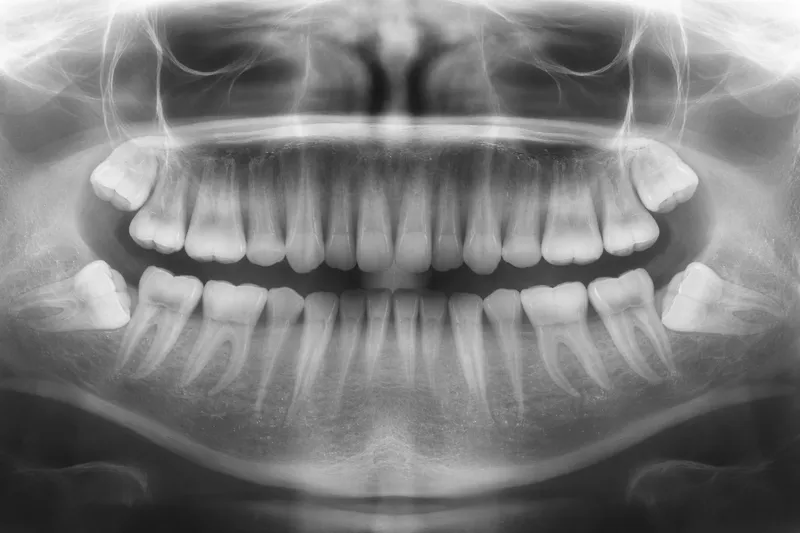
Every patient starts with a consultation. We take X-rays, explain what we see, and give you a treatment plan before anything is scheduled. We file most dental insurance plans for you.
Schedule your wisdom teeth consultation → or call us at (512) 806-7740.
Nervous About Wisdom Teeth Removal?
That’s completely normal, and you won’t be rushed. Here’s what helps most patients feel at ease:
- You’ll know the plan before anything happens. Your consultation is just a conversation and X-rays. Nothing is removed that day, and you can ask as many questions as you need.
- You won’t feel pain during the procedure. The area is fully numbed with local anesthesia before we begin.
- Surgical cases are done under IV sedation. You’ll be deeply relaxed, your vital signs are monitored the whole time, and most patients don’t remember the procedure afterward. See how IV sedation works.
- For simpler extractions, ask about laughing gas. Nitrous oxide can help take the edge off.
- You’ll go home with clear instructions and a number to call if anything feels wrong.
Wisdom Teeth—To Remove or Not to Remove?
Wisdom teeth (third molars) are the last set of teeth to develop, typically appearing between the ages of 17 and 25. Not everyone needs their wisdom teeth removed, but many people do. At Hutto Hippo Family Dental, we evaluate each patient individually and recommend extraction only when it’s truly necessary. We serve patients from Hutto, Taylor, Round Rock, Pflugerville, Georgetown, and Manor.
Why Wisdom Teeth Cause Problems
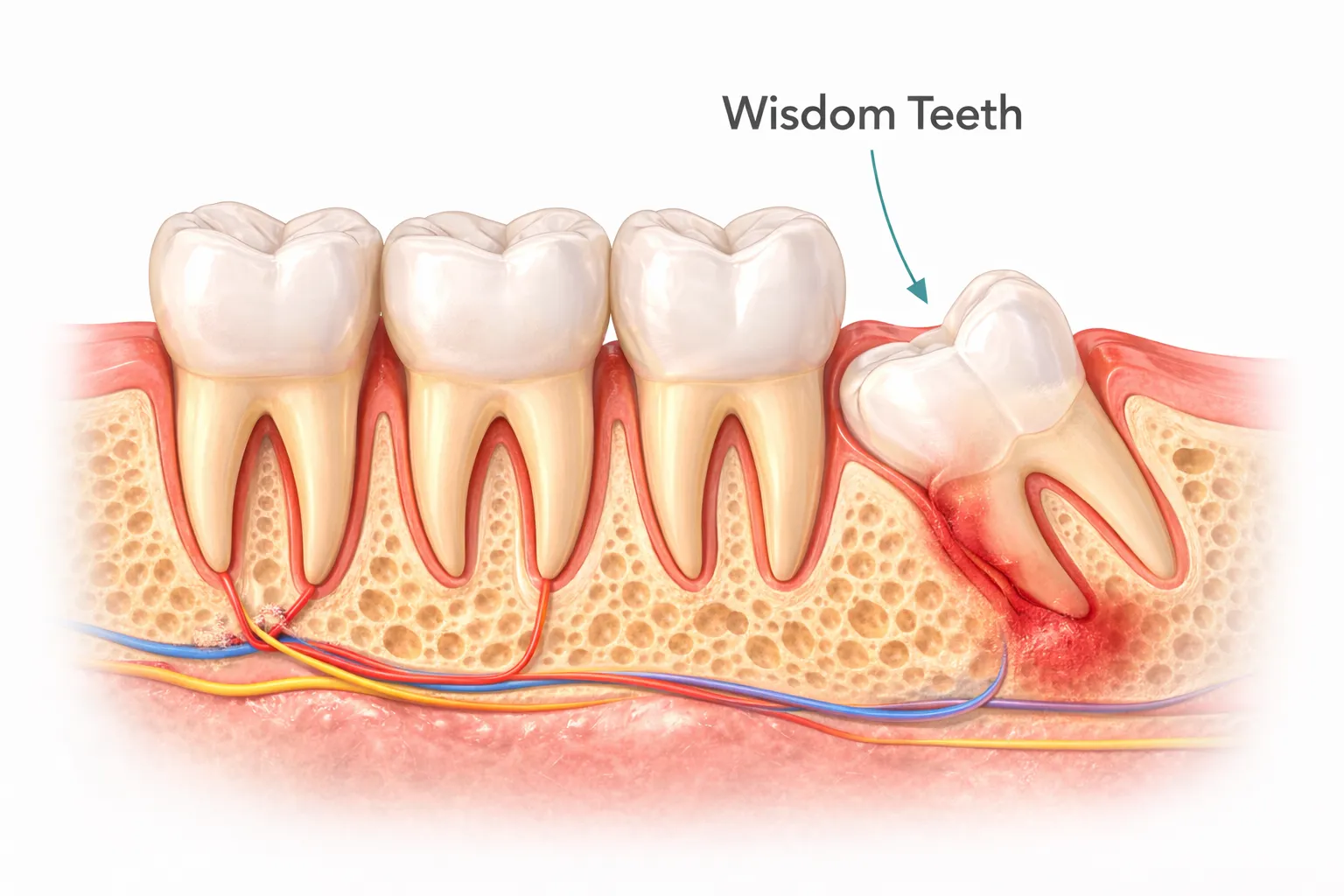
Wisdom teeth often don’t have enough room to emerge properly, causing them to become:
- Impacted – Trapped beneath the gum line, unable to fully erupt
- Partially erupted – Coming through at an angle, which can trap bacteria and cause infection
- Misaligned – Growing in a direction that damages adjacent teeth
When wisdom teeth are impacted or misaligned, they can crowd nearby teeth, create pockets where bacteria accumulate, and lead to repeated infections. In some cases they can also damage the roots of adjacent molars — a problem that may not be visible without X-rays.
Signs You May Need Wisdom Teeth Removal
- Pain or tenderness at the back of the mouth
- Swelling or infection around the wisdom tooth
- Damage to adjacent teeth
- Cavities in the wisdom tooth or neighboring teeth
- Cysts forming around the tooth
- Repeated infections at the back of the gum line
Not every wisdom tooth needs to be removed immediately. Regular monitoring with X-rays can determine whether an asymptomatic wisdom tooth is likely to cause future problems.
What to Expect During Wisdom Teeth Removal
Every wisdom tooth removal starts with a consultation:
- Consultation — we take X-rays, examine your wisdom teeth, and give you a treatment plan. We’ll explain whether your teeth can be removed with local anesthesia or are best removed surgically under IV sedation.
- Procedure day — your wisdom teeth are removed in our Hutto office.
During the procedure:
- The area is fully numbed with local anesthesia
- For impacted teeth, a small incision may be made in the gum
- The tooth is gently loosened and removed (sometimes in sections for fully impacted teeth)
- The site is cleaned and closed with sutures if needed
- Gauze is placed to control bleeding
Most patients are surprised by how comfortable the experience is. We take extra care to ensure you feel no pain during the procedure.
Surgical Wisdom Teeth Removal with IV Sedation
For impacted or more complex wisdom teeth, we offer surgery in our office under IV sedation on scheduled surgery days. These procedures are performed by a visiting general dentist who provides oral surgery services, and you’ll meet them at your consultation. If your case is better suited to an oral surgeon, we’ll refer you.
IV sedation is given through a small line in your arm, and your blood pressure, oxygen level, and heart are monitored throughout. It is not general anesthesia: you won’t be fully asleep and you’ll be able to respond to instructions, but you’ll feel deeply relaxed and most patients don’t remember the procedure afterward.
Preparing for IV sedation:
- Bring a responsible adult (18 or older) to stay at the office during your procedure, drive you home, and stay with you for the rest of the day.
- Don’t eat for several hours beforehand. You’ll receive exact timing and full instructions at your consultation.
- For 24 hours afterward, don’t drive, drink alcohol, or make important decisions.
Recovery After Wisdom Teeth Removal
Most patients feel back to normal within a few days to a week. Surgical removal of impacted teeth usually takes a little longer than a simple extraction. You’ll get written aftercare instructions for your case. Here’s what a typical recovery looks like:
Day 1: The First 24 Hours
- Rest and plan to take the day off from work or school
- Bite gently on gauze to control bleeding for the first hour; light oozing is normal for the rest of the day
- Apply ice packs to your cheek in 20-minute intervals to reduce swelling
- Take pain medication as directed. Over-the-counter ibuprofen is often enough
- Stick to cool, soft foods such as yogurt, applesauce, and smoothies (eaten with a spoon)
Days 2–3
- Swelling and stiffness are usually at their worst around this point, then start to ease
- Rinse gently with warm salt water after meals to keep the area clean
- Don’t drink through a straw, spit forcefully, or smoke for at least 72 hours. Suction can dislodge the blood clot and cause dry socket
- Many patients return to school or desk work around day 2 or 3
Days 4–7
- Pain and swelling should keep getting better each day
- Slowly add back softer regular foods as you feel comfortable
- Some jaw stiffness or bruising on the cheek can linger, and both fade on their own
After the First Week
- Most patients are back to their usual routine
- The sockets keep filling in over the next few weeks, so keep rinsing after meals
Call us if pain gets worse instead of better after day 3 or 4, or if you have worsening swelling, fever, a bad taste that won’t go away, or trouble swallowing. These can be signs of infection or dry socket. You can reach us at (512) 806-7740, including after hours for dental emergencies.
Frequently Asked Questions About Wisdom Teeth
At what age should wisdom teeth be evaluated? We typically start monitoring wisdom teeth in the mid-to-late teens with X-rays. Early evaluation allows us to anticipate problems before they become urgent.
Can wisdom teeth cause problems even if they don’t hurt? Yes. Many impacted or misaligned wisdom teeth cause no immediate pain but are actively damaging neighboring teeth or forming cysts. Regular X-rays are the only way to detect these issues.
Do I need an oral surgeon for wisdom teeth removal? Not always. Dr. Han Nguyen removes many wisdom teeth herself. Impacted or more complex cases can be done in our office under IV sedation by a visiting general dentist who provides oral surgery services. When a case is best handled by an oral surgeon, we’ll refer you. Either way, your consultation, X-rays, and follow-up care stay with our team.
Do I need a consultation first? Yes. Every patient has a consultation with X-rays before surgery, so you know exactly what’s recommended and why before anything is scheduled.
How much does wisdom teeth removal cost? It depends on how many teeth need to come out, whether they are impacted, and whether your case needs IV sedation. Here’s how we get you a clear number before anything is scheduled:
- Share your insurance details when you book, and we’ll check your benefits before your visit.
- At your consultation, we take X-rays and build your treatment plan.
- You get an itemized estimate that lists each tooth, the type of removal, and sedation if needed, with what your insurance is expected to pay and what your share will be.
We file most dental insurance plans for you. Some plans cover IV sedation separately or not at all, so we’ll point that out on your estimate. If you don’t have coverage, ask about our flexible payment plans.
How many wisdom teeth will I need removed? It depends entirely on your situation. Some patients need all four removed; others may only need one or two; and some people never need any removed at all.
Related Services
After wisdom tooth extraction, you may benefit from:
- Sedation Dentistry — learn about our sedation options, including IV sedation for surgical wisdom teeth removal
- Emergency Dental Care — if a wisdom tooth becomes acutely infected before your scheduled appointment
- Gum Disease Treatment — partially erupted wisdom teeth can create pockets where gum disease develops
Contact us today to schedule an evaluation of your wisdom teeth.
Ready for a healthier smile?
Schedule your appointment today. We accept and file most dental insurance plans and offer flexible payment options. New patients are always welcome!